
Exercise and Dementia: Improving Cognitive Health Through Movement
- ravindersahni
- Feb 5, 2025
- 2 min read

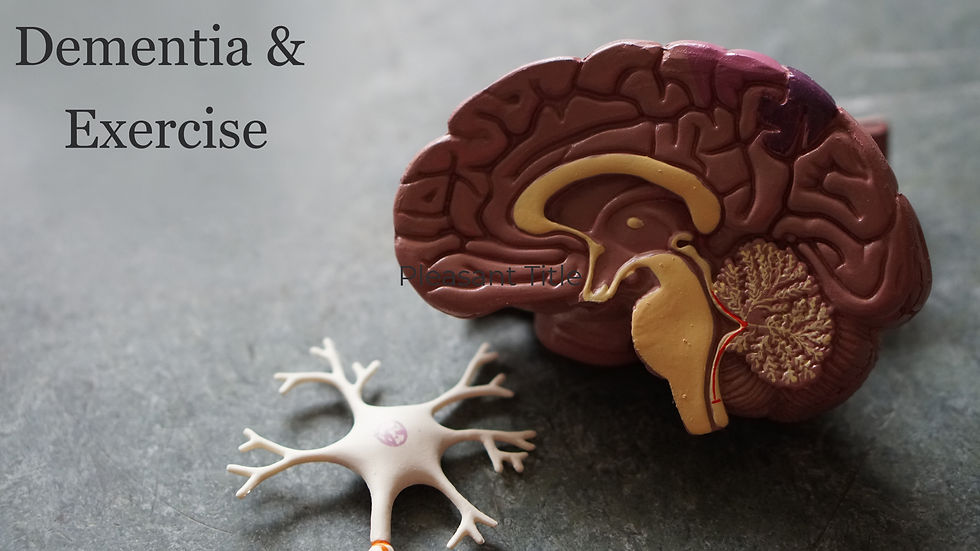
Dementia affects millions worldwide, creating challenges for individuals and their families. While there is no cure, research consistently highlights the significant benefits of exercise in managing symptoms and promoting brain health. In this blog, we explore how physical activity supports cognitive health and enhances the quality of life for those living with dementia.
How Exercise Supports Brain Health
Regular exercise plays a vital role in brain health by increasing the production of brain-derived neurotrophic factor (BDNF), which aids neuron growth and survival. It also improves cardiovascular health, ensuring better blood flow and oxygen delivery to the brain. Together, these effects slow cognitive decline and lower the risk of dementia.
Best Exercises for Dementia Patients
Aerobic Activities: Walking, swimming, and cycling improve heart health and boost cognitive function.
Strength Training: Resistance exercises maintain muscle strength and support mobility.
Balance Exercises: Yoga and tai chi reduce the risk of falls, which is crucial for people with dementia.
Combination Activities: Dancing and group sports integrate physical movement with cognitive challenges for added benefits.
Research Highlights
Studies show that exercise can delay dementia symptoms, reduce anxiety and depression, and significantly improve quality of life. Activities that encourage social interaction, like group exercises, help combat isolation and enhance emotional well-being.
Simple Ways to Incorporate Exercise
Start Small: Begin with light activities like short walks or gentle stretches.
Establish a Routine: Consistency helps build long-term habits and maximises benefits.
Modify as Needed: Tailor activities to match individual capabilities and limitations.
Make It Fun: Dancing, gardening, or even playing with pets can make exercise enjoyable and engaging.
How Caregivers Can Help
Caregivers can encourage physical activity by incorporating light exercises into daily routines. Seeking guidance from physiotherapists to create personalised exercise plans can ensure safety and effectiveness. Additionally, community dementia-friendly exercise programs provide both social connection and professional support.
Professional Physiotherapy Services
Physiotherapists are key in supporting individuals with dementia by designing tailored exercise programs that improve physical and cognitive health. At PhysioReach, we specialise in mobile physiotherapy services, including falls prevention and strength-building, to help clients stay active and independent.
Take the Next Step
Exercise is a powerful tool in managing dementia symptoms and improving overall quality of life. Whether you’re a caregiver or seeking support for yourself or a loved one, PhysioReach is here to help.
to learn more about our dementia-friendly physiotherapy services and take the first step towards better health.

Comments